Feedback quality in a contact center depends on more than good intentions. It hinges on the evidence you review, how quickly you deliver it, whether your scorecard is consistent, and how you follow up. Contact centers that hold one-to-one feedback sessions at least weekly report agent satisfaction as high as 74%, compared with just 45% where no formal review happens at all, according to COPC's 2022 contact center benchmarking research. That's an association, not proof of cause—but it points to a real pattern.
This guide walks through a practical workflow: preparing before you listen, reviewing a call, delivering feedback that sticks, involving the agent, documenting next steps, and using QA data to spot patterns a single call can't show.
Key Takeaways
- Specific, evidence-based feedback tied to one call moment beats a vague score every time.
- Use Situation-Behavior-Impact-Recommendation to link what happened, why it mattered, and what to do next.
- Deliver feedback privately, with one or two prioritized actions—not a long list of corrections.
- Confirm feedback stuck by tracking follow-up calls, scorecard trends, and customer outcomes.
How to Provide Call Feedback
Step 1: Define the Purpose and Review the Call Objectively
Before you press play, decide why you're having this conversation. Are you reinforcing something that worked? Correcting a compliance gap? Addressing a customer experience issue? Or supporting a longer coaching goal?
Then listen to the complete interaction, not just the clip someone flagged. A single sentence pulled out of context tells you very little.
- Note the call type, customer intent, and resolution
- Track transfers, holds, silence, and any escalation points
- Compare what you heard against the approved QA scorecard, company policies, and CRM notes
Judging an isolated phrase without this context is how disputes start.
Step 2: Identify Specific Behaviors and Their Impact
Vague feedback produces vague improvement. Instead, record the exact moment (with a timestamp or transcript excerpt) that you want to discuss.
Separate what you observed from what you assumed. "You sounded careless" is a judgment about personality. It's not useful. Replace it with the actual evidence:
- The agent interrupted the customer twice during account verification
- The required disclosure was skipped before discussing pricing
- The explanation of the return policy left out the 30-day window
Then explain the impact: Did it slow resolution? Create compliance exposure? Risk a repeat contact? If you're citing an external benchmark for that impact, name the source.
Step 3: Deliver Feedback Using a Clear, Two-Way Structure
This is where most feedback conversations either land or fall flat. The Situation-Behavior-Impact framework, developed by the Center for Creative Leadership, gives you a repeatable structure: describe the situation, state the observable behavior, and explain the impact it had.
CCL's guidance adds an optional fourth step, asking about intent, which turns a one-way critique into an actual conversation.
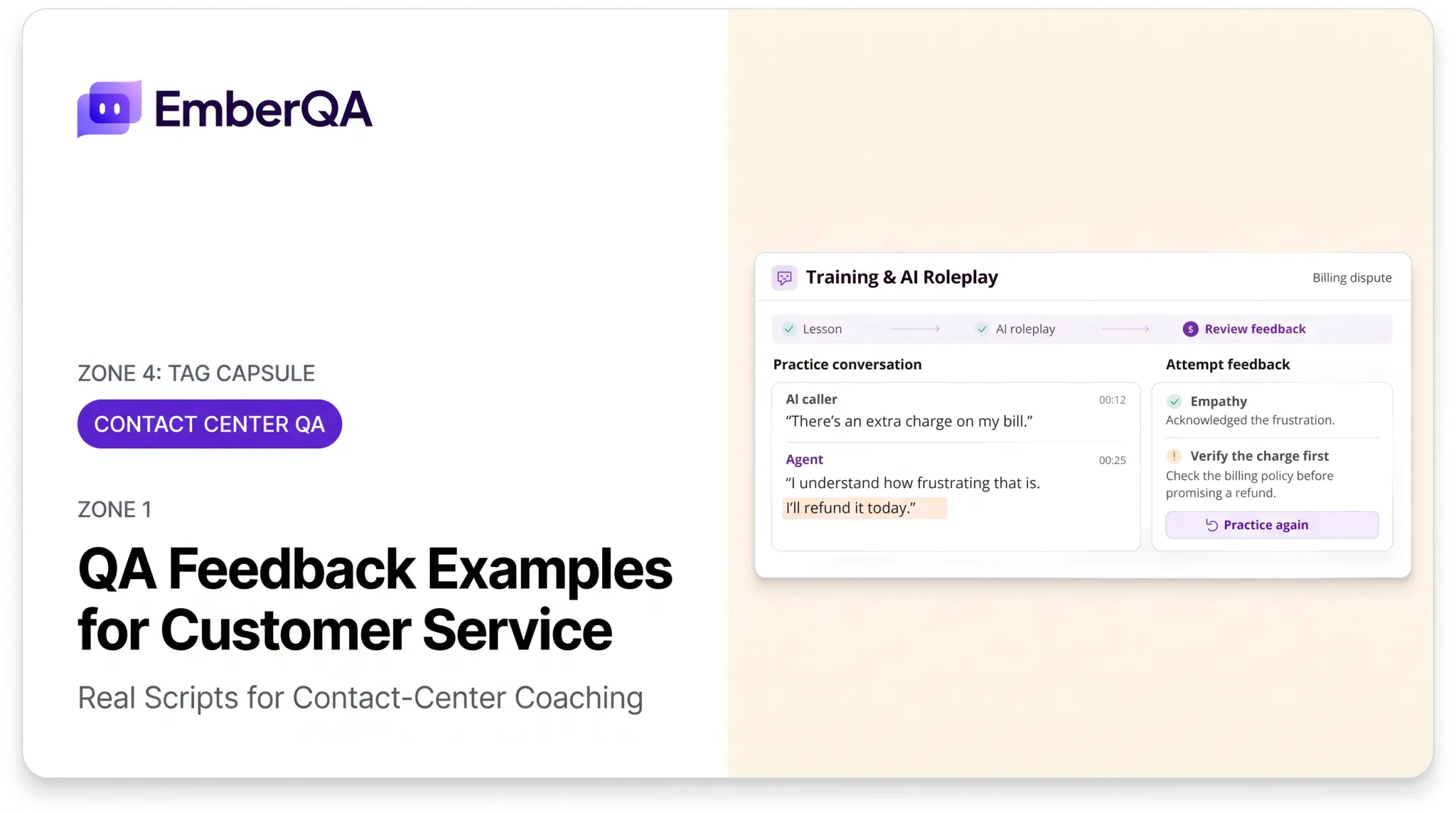
Applied to call feedback, that looks like:
- Situation – "On the call at 2:14 PM with the customer requesting a refund..."
- Behavior – "...you offered the refund before verifying the account, which the scorecard requires."
- Impact – "That created a compliance gap and meant we couldn't confirm we were speaking with the account holder."
- Recommendation – "Next time, run verification first, even if the customer seems impatient."

Start with genuine recognition where it's earned, then address the highest-priority issue directly. Don't dilute a serious compliance problem by burying it in praise.
Ask the agent how they saw the call and what got in their way. Sometimes the barrier is a system, a script, or a training gap, not the person.
Step 4: Agree on an Action and Follow Up
A good conversation without a next step evaporates by Friday. Convert the discussion into one or two observable actions:
- Confirm understanding before troubleshooting begins
- Use a specific acknowledgment phrase during escalations
- Follow the required disclosure word-for-word on the next five calls
Define how you'll measure progress, which calls you'll review, and when you'll revisit the plan together. Then document the evidence, the feedback, the agent's perspective, the agreed action, and the follow-up date in your QA workflow. If it isn't written down, it's easy to lose track of whether it happened.
Step 5: Use QA Data to Make Feedback More Complete
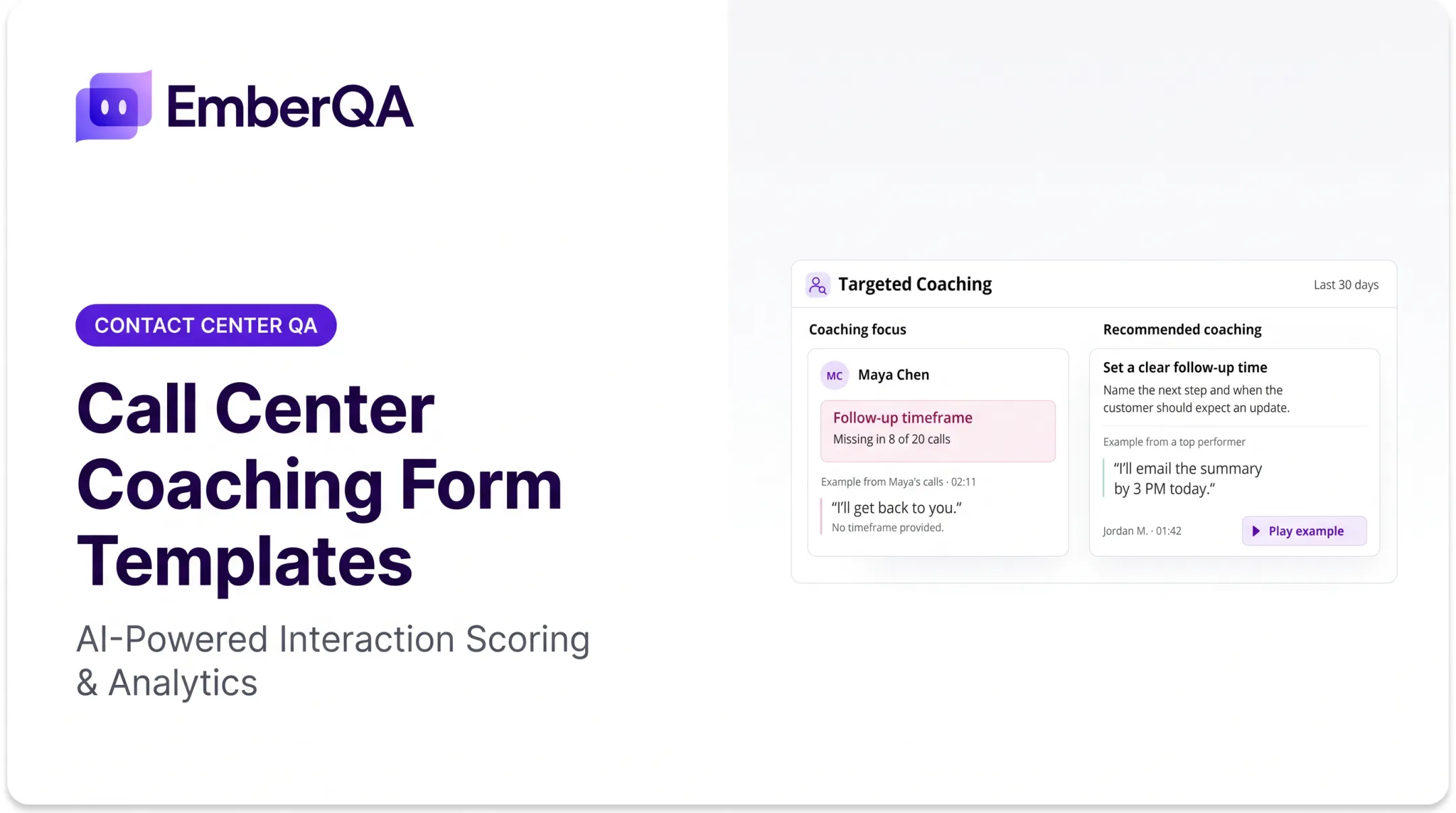
One call is a data point, not a pattern. Before treating a single interaction as representative, combine it with scorecard results, customer comments, CRM outcomes, and any recurring trends across that agent's calls.
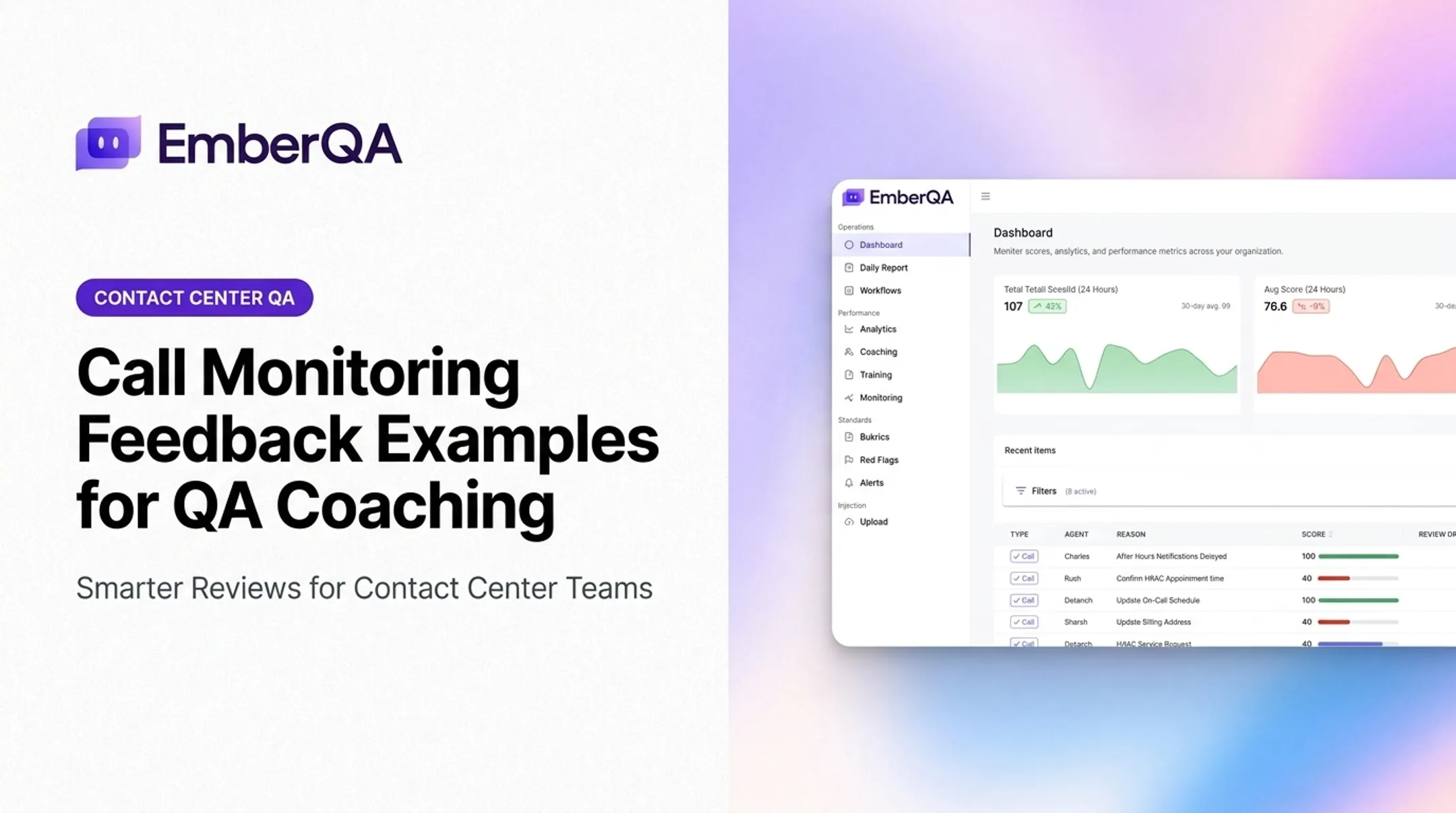
QA platforms help here. EmberQA, for example, scores every customer interaction against a custom rubric instead of the small manual sample most teams rely on.
ECA, one of EmberQA's customers, moved from reviewing under 1% of calls manually to scoring 100% of them. That made calls searchable, comparable, and tied to specific coaching moments instead of guesswork.
Automated scoring can surface red flags and recurring gaps faster than a manager working through a spreadsheet ever could. But AI-generated signals aren't the final word, especially on nuanced empathy, intent, or regulated disclosures. Human judgment still decides what goes into the coaching conversation.
When to Provide Call Feedback and What to Prepare
Feedback works best as a regular rhythm, not something saved for quarterly reviews. Positive feedback can go out close to the successful call. Corrective feedback should still be timely, but only after you've verified the facts and the agent has a reasonable chance to engage. ICMI recommends discussing batches of evaluations two to four times a month—frequent enough that the call is still fresh in everyone's memory.

Urgent safety, privacy, or compliance issues are the exception. Those get escalated immediately under your company's policy, not saved for the next scheduled one-on-one.
Materials to Gather Before the Session
Before you sit down for a feedback session, you need:
- An accessible recording or transcript
- The current scorecard version
- Call metadata (date, queue, duration, disposition)
- Relevant scripts or policy documents
- Customer or CRM context
- A secure way to document the conversation
If the recording is incomplete, the audio is poor, or the data conflicts, don't present an uncertain observation as settled fact. Flag it and gather more before drawing a conclusion.
How to Prep the Conversation
Walk in prepared, not improvising. Before the session:
- Pull two or three concrete call examples
- Decide the single most important behavior to discuss
- Have one strong example that shows what good looks like
In regulated environments such as insurance, financial services, collections, and healthcare, confirm disclosure, verification, privacy, recording-consent, and escalation rules before you meet.
Debt collection calls, for instance, carry specific disclosure rules under Regulation F. Insurance sales calls tied to certain Medicare Advantage products have their own recording and retention requirements. These vary by jurisdiction and call type, so check current requirements rather than assuming one rule applies everywhere.
Privacy, Tone, and Escalation Readiness
Deliver constructive feedback privately, in a calm, respectful tone. Have a clear escalation path ready for serious misconduct, threats, discrimination, or privacy incidents. Those issues do not wait for the next coaching cycle.
Keep the goal on development and accountability: never expose private customer information, and never criticize an agent in front of peers.
Key Factors That Affect Results When Providing Call Feedback
Feedback outcomes depend on more than the score assigned to a call. A handful of controllable factors decide whether the conversation actually changes behavior.
Evidence Quality and Context
A partial recording or missing CRM detail can produce an unfair conclusion, and the agent will spend the conversation defending the record instead of improving. Verify the complete interaction and relevant workflow before connecting a behavior to any outcome.
Specificity and Actionability
"Be more professional" or "improve your tone" doesn't tell anyone what to do differently. Use the exact call moment, offer replacement language, and where possible, run a short role-play so the desired behavior becomes repeatable.
Timing and Cadence
Feedback delayed by weeks weakens the connection between the call and the coaching point. A predictable cadence of prompt recognition, timely correction, and scheduled one-on-ones keeps evaluation from feeling arbitrary.
Balance and Psychological Safety
Feedback that's only negative breeds defensiveness. A forced "praise sandwich" can bury a serious issue just as easily. Match the structure to the situation: recognize genuine strengths, address the gap directly, and give the agent space to respond without an audience.
Scorecard Consistency and Personalization
Agents need consistent standards, but identical feedback for every person ignores role, experience, and call complexity. Calibrate reviewers regularly, and let trend data, not a single unusual call, decide which behavior to prioritize.

Common Mistakes and Troubleshooting Issues
Avoid these patterns:
- Vague, personality-based feedback ("you sounded uninterested")
- Delayed feedback given weeks after the call
- Public correction in front of peers
- Metrics-only feedback with no behavioral explanation
- Overloading one session with five or six improvement areas
Problem: The agent disputes the feedback or score. Incomplete evidence, unclear criteria, or inconsistent reviewers are usually the cause. Recheck the recording and rubric, invite the agent's perspective, and route disagreements through a calibration or appeal process.
Problem: Feedback is delivered, but behavior doesn't change. Check whether the action was specific, realistic, practiced, and followed up on. If the same issue repeats across many agents, the root cause may be training, tooling, or process—not any one person.
Problem: Managers can't review enough calls to spot real patterns. Manual sampling caps out fast. An AI-assisted QA platform like EmberQA can analyze interactions at scale, apply a consistent rubric, and flag urgent risks for human review.
EmberQA's Pro plan includes improvement-plan tracking that monitors an agent's progress against a metric target over time. Always verify automated outputs before acting on them for discipline or compliance decisions.
Conclusion
Effective call feedback isn't complicated, but it does require discipline:
- Verified evidence
- A consistent structure like Situation-Behavior-Impact-Recommendation
- Respectful delivery
- One clear action
- A scheduled follow-up
Skip any of those steps and the conversation risks becoming just another number the agent forgets by lunch.
Most contact centers can start with a solid manual workflow. As call volume grows, layer in QA data and AI-assisted analysis. EmberQA scores every interaction instead of a small sample, so feedback stays more consistent, more targeted, and easier to scale across a whole team.
Frequently Asked Questions
How do you attract customers on a call?
Active listening, clear value communication, and relevant discovery questions build trust faster than a scripted pitch. Handle objections with empathy, guide toward a clear next step, and use call feedback to reinforce what works.
How do you give effective feedback on a call?
Use a specific call example, describe the observable behavior and its impact, and suggest a concrete alternative. Invite the agent's perspective on what happened, then agree on one follow-up action you'll both revisit.
What should call feedback include?
Include the call context, supporting evidence like a timestamp or transcript excerpt, the specific behavior, its customer or business impact, what to repeat or change, and a measurable next step.
How soon after a call should feedback be given?
Feedback should happen while the interaction is still easy to recall, but supervisors should verify the facts first. Corrective feedback needs a private setting; don't rush it just to hit a speed target.
How do you give negative feedback to a call center agent?
Focus on the behavior, not the person, using neutral language and a clear explanation of the impact. Listen to their perspective, address any urgent compliance matter directly, and close with practical support and a follow-up date.
How can AI help with call feedback?
AI can analyze far more interactions than manual sampling allows, apply consistent scoring criteria, and flag red flags or recurring patterns for review. Human managers still handle context, empathy, and final decisions—especially on nuanced or regulated calls.