Effective coaching isn't about vague criticism or isolated anecdotes. It’s a two-way conversation that connects specific, observable behaviors to clear business goals. It transforms the manager’s role from judge to partner, helping agents improve their skills, customer outcomes, and overall performance.
This article provides a practical framework for preparing, conducting, and measuring coaching conversations. We’ll cover how to use interaction data and quality assurance (QA) insights to stop guessing and start building a high-performing team.
Key Takeaways
- Focus performance coaching on observable behaviors, clear goals, and agreed-upon actions, not general judgments.
- The best coaching conversations are built on evidence, active listening, employee ownership, practice, and consistent follow-up.
- Separate skill-development needs from problems caused by broken processes, technology issues, or unrealistic workloads.
- In high-volume contact centers, analyzing every interaction helps prioritize coaching where it will have the most impact.
How to Improve Performance With Coaching
A structured coaching process turns feedback from an ambiguous critique into a clear path for improvement. By focusing on evidence and collaboration, you can help your agents understand exactly what they need to do to succeed. Follow these four steps to make your coaching conversations more effective.
Step 1: Define the Performance Goal and Evidence
Before you schedule a meeting, identify one specific outcome or behavior to improve. Ambiguous goals like "be more empathetic" are hard to measure. Instead, focus on tangible actions:
- Improving call control and reducing handle time.
- Asking better discovery questions.
- Increasing documentation accuracy in the CRM.
- Using required compliance language.
- Improving first-contact resolution rates.
Next, gather multiple examples of the behavior. Relying on a single, emotionally charged interaction can create a distorted picture. Instead, look for patterns across several calls, emails, or chats. Compare these examples against your approved QA rubric and customer outcome data.
Automated QA platforms close that evidence gap. Manually reviewing interactions is slow; studies show many centers only review 1% to 3% of their total interactions.
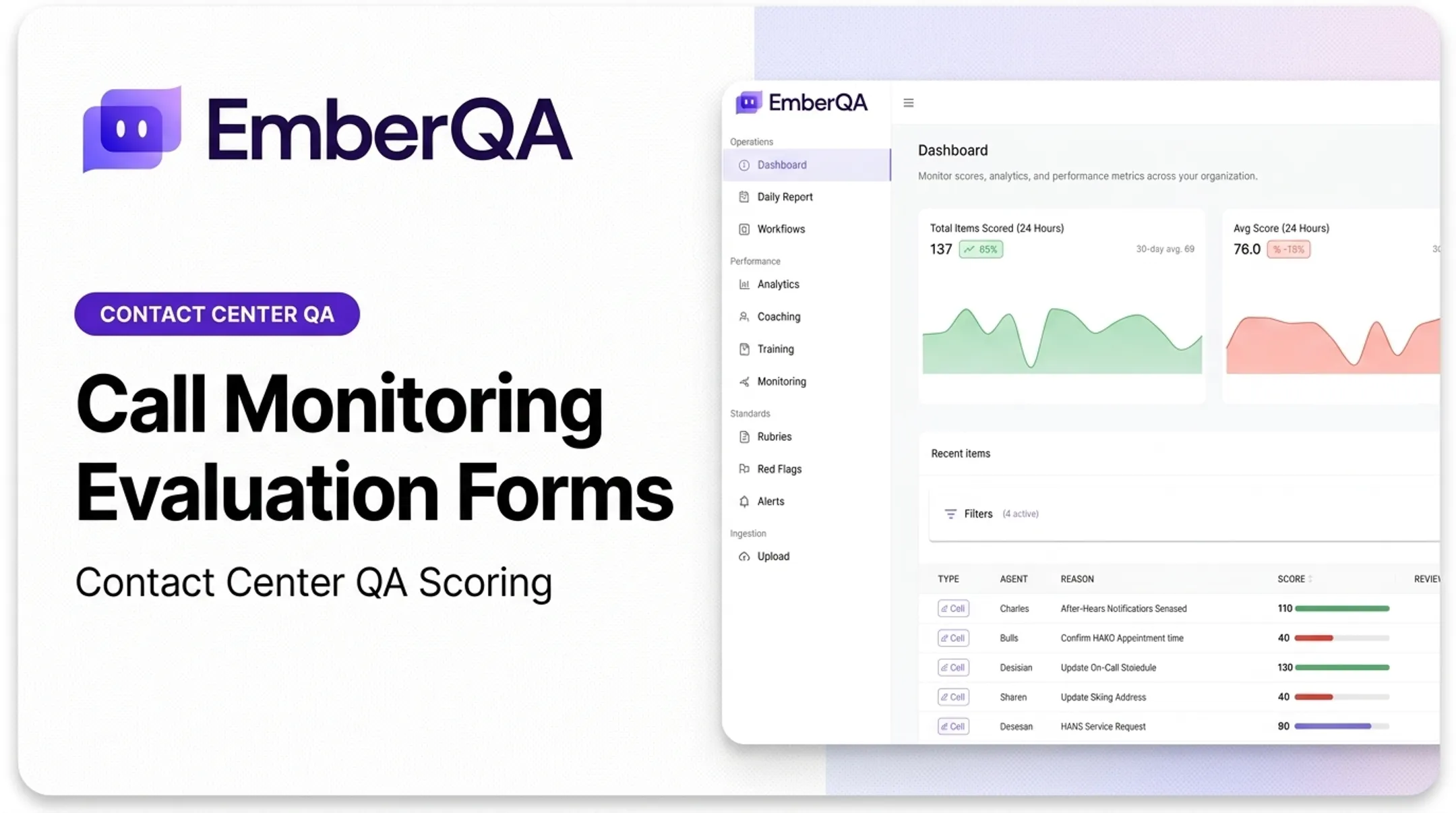
Tools like EmberQA score 100% of interactions against your custom scorecards, so managers can spot recurring issues and walk into coaching with objective data.
Step 2: Hold a Two-Way Coaching Conversation
The goal is a dialogue, not a lecture. Start the conversation with curiosity, not an accusation. Ask the employee for their perspective first.
For example, you could say, "I've flagged a few calls about account updates from last week. Before I share my thoughts, how do you feel they went?"
Leading with their view usually surfaces a more honest account of what happened. Use active listening and open-ended questions to uncover the root cause of the performance gap. Is it a lack of knowledge, a confusing process, a technology limitation, or something else? By understanding the barrier, you can find the right solution.
When you present your feedback, tie it to specific, observable behaviors and their impact. Separate what happened from any assumptions about the employee's attitude or intent.
- Instead of: "You sounded annoyed with that customer."
- Try: "On that call, when the customer asked for the third time about the policy, I noticed your speaking pace increased and you interrupted them. This can make a customer feel rushed and unheard."
Step 3: Co-create an Action Plan
Once the employee understands the gap, work together to create a simple, actionable plan. Agree on one or two practical steps they can apply in upcoming interactions. This might include using a specific call-opening script, confirming details before ending a chat, or following a compliance checklist.
Define what success looks like, who owns each action, and when you’ll review their progress. The plan should also include opportunities for practice. If the issue requires more than a simple discussion, consider:
- Role-playing difficult conversations.
- Reviewing a call together to identify key moments.
- Shadowing a top-performing agent.
- Creating a job aid or checklist.
Platforms like EmberQA offer AI Roleplay Training where agents can practice conversations with an AI caller. This lets them build confidence and refine skills in a safe environment before engaging with live customers.
Step 4: Follow up, Reinforce, and Adjust
The coaching conversation is just the beginning. The real change happens through consistent follow-up. Review subsequent interactions against the same criteria you established in the action plan.
Recognize and reinforce specific improvements. When an agent successfully uses a de-escalation phrase you practiced, acknowledge it. If gaps remain, address them with equally specific feedback and adjust the plan.
Document the coaching session and its outcomes per your company’s policy. If you uncover a serious compliance risk or policy violation, escalate it through the proper channels—coaching is for development, not serious misconduct.
Use QA data to check whether the issue is isolated to one employee or signals a broader need for team training or process changes.

When Should You Use Coaching (and What Do You Need Beforehand?)
Coaching helps when someone can improve through feedback, practice, and support. It is not a substitute for fixing broken systems, clarifying vague expectations, or handling serious policy violations.
Typical Situations Where Coaching Is a Good Fit
Coaching works best for developing repeatable skills and reinforcing positive behaviors. Prioritize it in these situations:
- Specific skills — active listening, ticket documentation, or similar repeatable behaviors
- Effective behaviors you want to see more consistently
- New responsibilities when an employee is stretching into a larger role
- Manageable performance gaps where the person has the capacity to improve
- Strong performers who need stretch goals and continued refinement
In a contact center, focus coaching where interaction data shows a recurring pattern, a clear chance to improve customer experience, or a gap between knowing the process and executing it correctly.
Evidence, Expectations, and Readiness
Before you start a coaching conversation, make sure the foundation is in place.
First, confirm that expectations are clear. The employee should know the standard they are measured against and have the tools to meet it. Apply the QA rubric fairly and consistently across the team.
A COPC survey found that 89% of organizations have a QA calibration process, yet different managers still often score the same interaction differently.
Second, check your data. Use clear call recordings, consistent scoring, and relevant CRM context. If coaching relies on recorded calls, follow federal and state consent rules for recording.
Finally, establish psychological safety. The employee must be able to discuss challenges without fear of punishment. Frame coaching as supportive development, not discipline.

Key Factors That Affect Coaching Results
The success of coaching depends less on session count and more on quality. Several factors decide whether a coaching conversation drives lasting performance improvement.
Evidence Quality and Scoring Consistency
Coaching based on subjective impressions or a single bad call rarely works. It feels unfair, and agents dismiss it easily. Strong coaching starts with representative, accurate examples—consistent rubrics, searchable interaction data, and objective scoring.
Connect specific behaviors to customer outcomes (satisfaction scores) and operational metrics (resolution time) so agents see how their actions affect the business.
EmberQA supports this by auto-scoring every interaction, helping managers pull comparable examples and tie agent behavior to CRM results.
Goal Specificity and Employee Ownership
Vague goals lead to vague results. “Improve customer service” means little without specifics. Define goals as clear, behavior-based expectations:
- Situation: Customer calls to dispute a charge
- Action: Acknowledge frustration, verify the last three transactions, explain the dispute process with the approved script
- Standard: Resolve without escalation; complete case notes within 5 minutes
- Review point: Review three calls of this type next week
When employees help diagnose the problem and choose the actions, they own the solution. That ownership raises accountability and follow-through.
Coach Capability and Conversation Quality
Strong coaches listen first. They ask precise questions, balance corrective feedback with recognition, and separate performance feedback from personal criticism. Those skills improve with deliberate practice.
Fairness also depends on shared standards. Run regular calibration sessions where supervisors score the same interactions, compare notes, and align on the QA rubric so coaching stays consistent across the team.
Practice, Reinforcement, and Measurement
A coaching insight only matters if agents use it on live work. Reinforce new skills with role-play, joint call reviews, or deliberate practice on the next few interactions.
Measure progress with leading and lagging indicators. Has the agent’s QA score for “empathy statements” improved—and has CSAT moved with it?
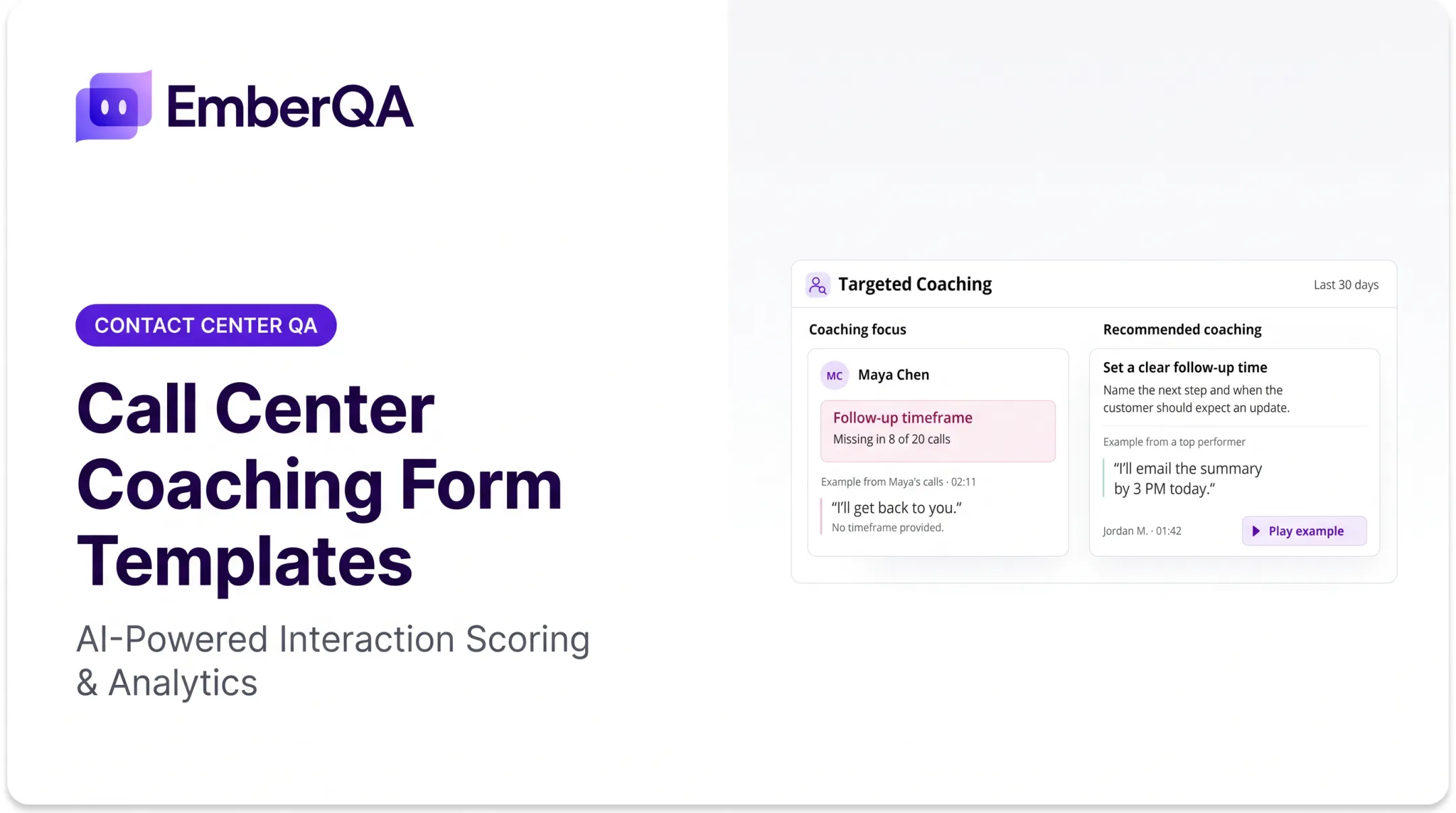
EmberQA’s Agent Improvement Plans let managers set metric-specific targets, define a monitoring window, and track daily progress against the coaching goal.

Environment, Workload, and Process Support
Sometimes the problem isn’t the employee—it’s the environment. Coaching can’t fix a broken process, an overloaded queue, or a faulty system. If the same issue shows up across multiple agents, dig deeper.
Look for barriers outside the employee’s control:
- Unrealistic performance targets
- System friction or slow software
- Unclear or conflicting policies
- Gaps in staffing or training
The organization owns those systemic fixes. Coaching helps agents work within the system; leaders must make the system workable.
Common Mistakes and Troubleshooting
Coaching still fails when the root cause is wrong or follow-up slips. Use the checks below to catch the usual failure points early.
Common Mistakes to Avoid
- Vague feedback: Skip lines like "be more professional." Name the exact behavior you saw and what "good" looks like next time.
- One-sided lectures: Keep it a dialogue—ask more questions than you answer.
- Only calling out the negative: Pair each fix with real recognition of what the agent already does well.
- Inconsistent scoring: Apply the same QA rubric the same way for every agent, every review.
- Coaching too many things at once: Limit each session to one or two behaviors so the agent can practice and stick the change.
- Treating automated scores as final judgments: Use AI scores to flag interactions for review, then add human context—especially on compliance-sensitive or edge-case calls.
Troubleshooting Common Problems
- If the employee disagrees with the feedback: Stay curious. Pull up the rubric and the interaction together, ask what context you missed, and align on the standard before you debate the score.
- If scores rise but business outcomes don't: You may be coaching the wrong metric. A perfect script still won't lift CSAT if the script confuses customers—widen the goal or fix the upstream process.
- If the same gap keeps returning: Retest the fix. The agent may need more practice, clearer docs, or a system change—or the issue may belong in formal performance management, not developmental coaching.

Alternatives and Complementary Approaches
One-on-one coaching isn't the only way to improve performance. For shared skill gaps, other approaches can be more efficient.
- Peer coaching: Pair a newer agent with a top performer on live or recorded interactions.
- Team calibrations: Review and score the same interactions as a group so everyone applies the rubric the same way.
- Group training: Use a short team session when the same knowledge gap shows up across many agents.
Coaching supports day-to-day skill building. It does not replace formal performance management, compliance escalations, or disciplinary steps when those are required.
Conclusion
Coaching improves performance when it connects reliable evidence to clear expectations, an honest conversation, and practical action. It’s a continuous cycle of feedback, practice, and measurement that helps employees own their development. The manager's role is to guide this process, helping agents understand performance gaps and practice better approaches.
At the same time, the organization must do its part by removing systemic barriers that coaching alone cannot fix.
Relying on manual sampling for coaching evidence is no longer enough. Comprehensive QA and interaction analysis tools like EmberQA help managers pull meaningful coaching opportunities from 100% of interactions. Moving from guesswork to full-coverage analysis makes performance improvement more targeted, consistent, and measurable for your entire team.
Frequently Asked Questions
How can coaching improve performance?
Coaching builds agent awareness of specific behaviors, clarifies expectations, and structures skill practice. Consistent follow-up and measurement create accountability and tie individual actions to business outcomes.
What are the 5 C's of performance management?
A common version includes Clarity (clear goals), Consistency (fair process), Communication (ongoing dialogue), Coaching (developmental support), and Collaboration (teamwork). Align on the framework that fits your performance process.
What is the difference between coaching and performance management?
Coaching is a developmental activity focused on improving an individual's skills and capabilities. Performance management is the broader system for setting expectations, running formal reviews, documenting progress, and applying consequences when needed.
How often should performance coaching take place?
Base frequency on role, experience, and coaching goals rather than waiting for an annual review. Many contact centers run two to four brief coaching conversations per agent each month, ideally right after observed behaviors.
How do you measure whether coaching is improving performance?
Compare baseline and post-coaching results using QA rubric scores, operational metrics like first-contact resolution, and employee feedback. Trends over time show whether coaching is effective.